
Regardless of your business type or industry, some customers will have a poor experience and post about it online. That’s normal—and manageable.
Negative reviews don’t have to define your reputation. Handled well, they can actually demonstrate your company’s reliability and values.
With the right response, you can turn a bad moment into a trust-building interaction, often salvaging the relationship with that customer while reassuring everyone else who’s reading.
This step-by-step guide shows you exactly how to handle negative reviews—and what to say—so you protect your brand and earn more positive word of mouth.
6 Steps to Respond to Negative Reviews
Whether you’re dealing with a single one-star review or need a scalable process for dozens each week, follow these six steps from start to finish:
- Claim Your Business Profiles
- Monitor Your Reviews
- Craft the Response
- Make Improvements
- Get More Positive Reviews to Drown Out the Negative Ones
- Respond to All Reviews
The Easy Parts of Responding to Negative Reviews
Negative reviews are easy to spot—and the fixes are usually straightforward. You don’t need a full investigation to reply well; you need empathy, ownership, and a clear next step.
Prospective customers aren’t looking for excuses. They want to see that you listened, apologized, and resolved the issue. Long explanations like “we were short-staffed” or “our internet was down” rarely help and can make things worse.
Focus on what you can control: acknowledge the problem, offer a remedy, and invite the reviewer to contact you directly so you can make it right. Many customers will take you up on it—and some will update their review after a good resolution.
If you manage reviews across multiple sites, consider using an online reputation tool that centralizes everything into one dashboard so you can track, triage, and reply without logging into five different platforms.
- Include in every reply: a thank-you for the feedback, a brief apology, ownership of the issue, a concise fix or offer, and a direct channel to continue the conversation.
- Avoid in every reply: defensiveness, blame, private details, or requests for personal information in public.
The Difficult Parts of Responding to Negative Reviews
It’s hard not to take criticism personally—especially when you care about your work. But emotional replies can escalate the situation and live online indefinitely.
Give yourself a little time before responding if you’re upset. Draft the reply, walk away, and reread it with a cooler head. Never argue online—keep it professional, solution-oriented, and brief.
Reputation turnarounds take patience. If your ratings are currently skewed negative, stick to a consistent plan of fast, thoughtful replies and steady outreach for new reviews. Partnering with an experienced online reputation management provider can speed this up and reduce guesswork.
Step 1 – Claim Your Business Profiles
Always reply from a verified business profile on the platform where the review appears. Replies from a personal account—or an incomplete profile—look unprofessional and may limit your options.
Start with one or two high-impact platforms rather than trying to claim everything at once.
Google Business Profile should be first for most companies. It’s typically where customers find you—and where they’ll return to voice concerns.
Yelp for Business is another priority. People post about all kinds of businesses on Yelp, not just restaurants or shops.
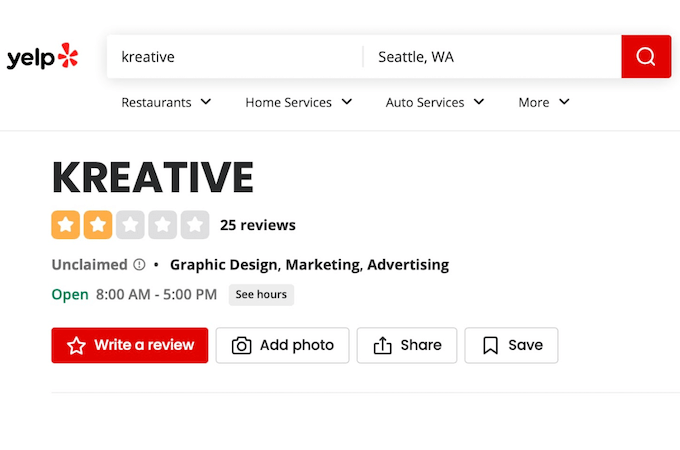
Customers can leave reviews whether you claim your profile or not—but you can’t reply until you do. Claiming also lets you add accurate business info, photos, and updates.
Prioritize where your audience actually posts: for example, G2/Capterra for B2B software, Tripadvisor for hospitality and attractions, Facebook for local services, or Trustpilot/BBB for ecommerce and consumer brands.
Once your key profiles are verified and complete, you’re ready to engage.
Step 2 – Monitor Your Reviews
Build a repeatable monitoring rhythm for both positive and negative feedback.
For small volumes, manual checks once or twice a day can work. As you grow, that becomes unscalable.
Manage All Your Reviews in One Place
Reputation tools aggregate reviews from major platforms into a single inbox or dashboard. Centralization reduces response time, prevents missed comments, and enables consistent messaging.
Use alerts (email, SMS, or app notifications) so you’re notified immediately when new reviews land.
Assign Team Responsibilities
Designate one or two people to monitor and respond. Shared inboxes without clear ownership lead to dropped balls.
Here’s what happens without ownership: one teammate assumes another will reply, nobody does, and the review sits unanswered.
Also avoid a single point of failure. If your primary responder is out, have a trained backup with access and guidelines.
Customers expect and deserve a prompt reply.
Step 3 – Craft the Response
Once your foundation is in place, write a response that’s personalized, public-facing, and concise. Remember: you’re speaking to the reviewer and everyone else reading your profile.
Avoid copy-paste templates. A few seconds of personalization—referencing the specific situation—signals authenticity.
Keep private details out of public replies. Invite the customer to continue via a direct email or phone line you control.
Act Quickly
Speed matters. Aim to reply within 12 hours and never later than 24. Fast responses show you care and limit the time a negative post sits without your side of the story.
If you need longer to fully investigate, acknowledge the issue promptly and share when you’ll follow up.
Apologize
Open with a brief apology—even if you feel the review isn’t entirely fair. A sincere “I’m sorry for the frustration this caused” reduces tension and sets a collaborative tone.
It’s not about admitting legal liability; it’s about empathy and respect.
Take Responsibility
Skip explanations that sound like excuses. Ownership builds credibility; rationalizations erode it.
Unless a claim is clearly false or abusive, own the miss and focus on the fix. Consider these two responses:
- Example A — “You’re right—our takeout service needs work. Thank you for the candid feedback. We’re tightening prep times immediately.”
- Example B — “We’re really busy on Saturday nights, so takeout orders are slower.”
Example A owns the problem and commits to action. Example B makes an excuse.
Offer a Resolution
Propose a clear remedy that matches the situation—refund, replacement, redo, or a credit for future services. The goal is to retain the customer and demonstrate fairness to onlookers.
Example: a dry cleaner who damaged a shirt offers to replace it and adds a credit for future cleaning. You keep the customer and signal accountability to others.
Avoid Conflict
There are two sides to every story, but arguing online never ends well. Keep your language calm and professional, even if the review feels harsh.
Assume every word may be screenshotted and shared. Don’t write anything you wouldn’t want public forever. If the tone is aggressive, acknowledge their frustration and de-escalate. If needed, consult your policy on harassment or abuse and flag reviews that violate platform rules.
When issues spiral, you may need broader action to repair your online reputation. Consistent, professional responses are step one.
Move the Conversation Offline
Public threads shouldn’t become back-and-forth debates. Provide a dedicated email or phone line and invite the reviewer to contact you directly.
Never ask the customer to share personal information in a public reply. Give them your contact details and reference a ticket or case number if you have one.
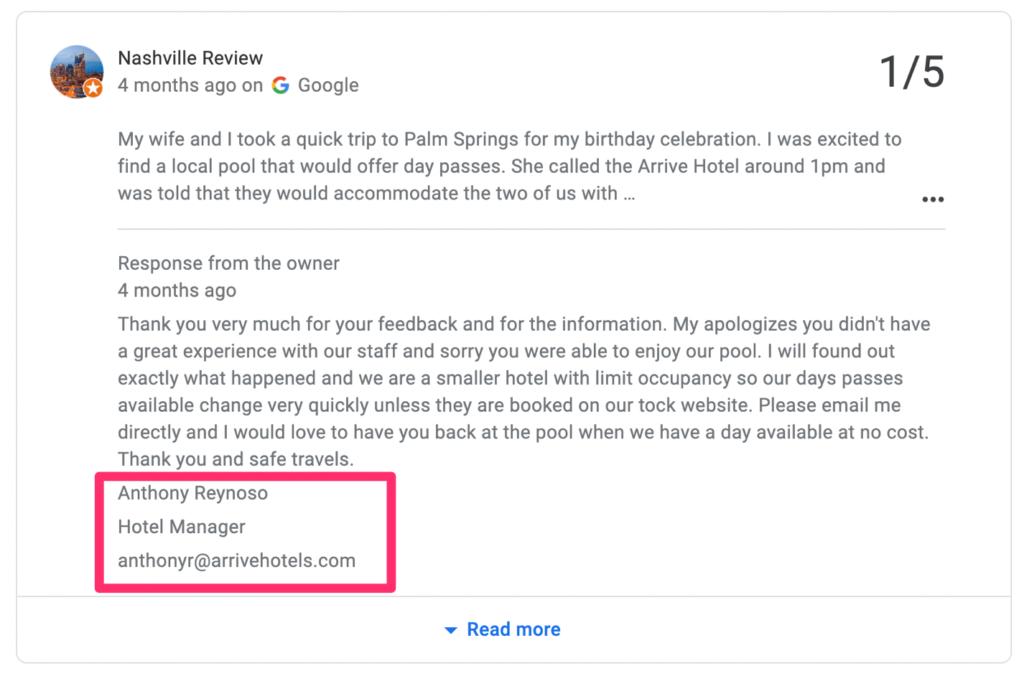
The example above (from a one-star Google review) shows a manager including a direct email address in the reply—far better than asking the reviewer to post their contact details publicly.
Step 4 – Make Improvements
Some negative reviews are outliers. Others reveal patterns you can fix. Treat feedback as free QA—close the loop so the same issue doesn’t recur.
When you wouldn’t otherwise hear about a problem, a review can be the signal that saves dozens of future customers from the same issue.
Ask For Feedback
Many reviews vent frustration without specifics. After you apologize, ask what would have made the experience better and what you can change next time.
Example for a hotel whose room wasn’t ready: beyond promising on-time rooms, consider proactive texts about delays, a complimentary drink, breakfast vouchers, a no-charge upgrade, or reward points—whichever best fits the situation.
Customers see things you don’t. Their perspective helps you refine policies and training.
Track Similar Complaints
Log every negative review in a simple tracker. Tag by category and location so you can spot patterns quickly.
Common themes might include:
- Slow service
- Rude staff
- Overcooked food
- Late delivery
- Too noisy
Some issues are outside your control, but many aren’t. Prioritize the ones you can fix quickly and those with the highest customer impact.
Train Your Staff and Update Your Process
Share patterns with your team and coach to a clear standard. If reviews mention unfriendly service, define what “friendly” looks like: greet within 30 seconds, make eye contact, use the customer’s name when appropriate, and thank them before they leave.
Words without change don’t help. Update checklists, SLAs, and scripts so improvements stick.
Small behavior shifts—smile, acknowledge, thank—have outsized effects on how customers feel.
Follow Up
Closing the loop turns a fix into loyalty. After resolution, send a quick email or make a short call to confirm everything’s squared away and ask if anything else would help.
Don’t pressure for an updated review, but a thoughtful follow-up often inspires customers to revise their rating on their own.
Step 5 – Get More Positive Reviews to Drown Out Negative Ones
Beyond individual replies, strengthen your overall presence. A steady stream of recent, authentic five- and four-star reviews will naturally outweigh a few negative ones.
Consistency matters more than bursts. Aim for a predictable cadence so your profiles always look active and current.
Ask Your Customers For Reviews
Reviews rarely happen by accident—ask at the right moment (after a successful delivery, resolved ticket, or completed service). Make it effortless: send a direct link via text or email so it’s a single tap to post. For in-person visits, use a QR code at checkout that opens your preferred review page.
Important policy notes: (1) Do not ask for Yelp reviews. Yelp explicitly prohibits solicitation and can penalize or suppress such content. Instead, encourage organic mentions on Yelp by reminding customers they can “find you on Yelp” without asking for a review. See Yelp’s policy.
(2) Don’t gate reviews. Filtering unhappy customers away from leaving a review (“review gating”) violates Google’s terms and can trigger removals or warnings on your profile. Ask everyone for honest feedback instead. Google’s review content policy. For recent enforcement context, see reporting on Google’s crackdown on fake or manipulated reviews. Details here.
Never tie rewards to positive reviews, and follow each platform’s specific rules on incentives and requests.
Remove Negative Reviews
Replying quickly and professionally is step one. When a review is clearly false, off-topic, spammy, or violates platform rules, it may qualify for removal. Some negative reviews might be eligible for removal, but the process and criteria vary by site.
What typically qualifies: hate speech, harassment, explicit or illegal content, conflicts of interest (e.g., competitors/employees), incentivized reviews, and off-topic promotional spam. For Google-specific criteria, review the Maps User-Generated Content policy; for Trustpilot, see their business and reviewer guidelines. Google policy • Trustpilot for businesses • Trustpilot for reviewers. Note that platforms generally won’t remove reviews that are merely negative opinions about a legitimate experience.
Many reputation management companies offer content removal services, making it easier to navigate policies, flag violations correctly, and follow through on appeals.
Examples that can qualify: promotional content, conflicts of interest, hate speech, or reviews unrelated to an actual customer experience. Because rules differ across platforms and enforcement is inconsistent, having an expert manage this process can save time and frustration.
If a review doesn’t meet removal criteria, a calm, constructive reply plus more fresh positive reviews is the best path forward.
Step 6 – Respond to All Reviews
Prioritize negatives, but don’t ignore positives or mixed feedback. Anyone who takes time to write a review deserves acknowledgment.
Short, sincere thank-yous on positive reviews reinforce what people like about you and encourage repeat business.
Adjust tone for mixed reviews: appreciate what went well, apologize for what didn’t, and offer a make-good where appropriate.
Acknowledge Positive Comments
Not every “bad” review is one star. Many are three stars with both pros and cons. Call out the good, own the shortfall, and invite them back.
Example for a restaurant: “We’re thrilled you loved the pasta—thank you! We’re sorry the chocolate cake missed the mark. Please ask for us next time; we’d love to make it up to you with a slice of carrot cake on the house.”
Have a Plan For Reviews You Can’t Respond To
Some negative content lives outside traditional review sites—on blogs, news articles, forums, or video channels—where you can’t post a public reply.
First, assess whether the content truly harms you or simply includes balanced pros and cons. Many reviewers include mild negatives to show neutrality—no action required.
When coverage is overwhelmingly negative or inaccurate, consider options to remove unwanted search results if possible, or use SEO reputation management to push them down in search results.
Meanwhile, keep doing the fundamentals well: deliver great experiences, ask satisfied customers for honest reviews (while following each platform’s rules), and respond quickly and professionally. Over time, that steady, visible effort is what earns trust—and better ratings.