
Negative publicity travels fast. If you don’t act quickly—and thoughtfully—bad press can tank your reputation and revenue in a hurry.
No business is immune, either. Whether it’s a harsh customer review, a slanted news article, or a careless moment caught on camera, the potential damage in an always-online world is enormous. Small mistakes can snowball into trending stories within hours.
So how do you respond when bad press comes knocking? By being prepared and moving with purpose.
Seven Steps to Respond to Negative Publicity
It’s never fun to confront negative information about your company, but ignoring it makes things worse. A disciplined, timely response limits the fallout and restores trust.
Here are the steps to position your business for success.
- Identify negative publicity quickly
- Correct any false information
- Act before the problem escalates
- Own up to your mistakes
- Explain how you will fix the problem
- Share positive information about your company
- Get bad press removed from the web
Some of these steps are straightforward and you may be able to handle them in-house. Others are complex, time-sensitive, and easy to mishandle without experience.
If you’re overwhelmed or you hit a wall, consider a professional online reputation management company. The right partner can triage angry reviews, pursue corrections or removals, and help rebuild a healthier brand image while you focus on running the business.
The Easy Part of Responding to Negative Publicity
Knowing immediately when your company is mentioned is essential—and it’s one of the simplest wins you can set up today.
Start by setting up Google Alerts for your company name, product names, executive names, and common misspellings. You’ll receive an email whenever your brand is mentioned on indexed sites, giving you near-real-time visibility and a head start on damage control.
Of course, the scope of the publicity dictates your next move. A lone one-star review calls for a measured customer-service response, while a safety issue, data incident, or product defect demands a broader plan and cross-functional coordination.
Managing reviews is a core part of managing your online reputation. Respond quickly, be courteous, and offer a concrete next step. Public readers notice how you handle criticism as much as the criticism itself.
When the story is bigger than a review or two, take a breath and prepare a comprehensive response. The larger the issue, the more thoughtful, coordinated, and transparent your plan must be.
Either way, it all starts with immediate awareness—and that part is easy to implement.
The Difficult Parts of Responding to Negative Publicity
After you detect the issue, speed matters. Unless you’re dealing with a simple review, resolving negative press is tougher than spotting it.
You’ll need a clear plan and a fix for the underlying cause—not just a statement. Without progress on the root problem, even the best PR won’t hold.
Keep customers, press, and stakeholders updated as you work. Pair that with a steady cadence of positive company news to balance the narrative and show momentum.
All of this is time-consuming and requires judgment across PR, legal, customer support, and operations. Most companies don’t have dedicated crisis resources on standby.
If you don’t want to go it alone, reputable reputation management services can guide the strategy and outreach. For legal concerns like defamation or privacy violations, consult a qualified media or defamation attorney—just note that legal remedies are often slower and costlier than coordinated ORM efforts.
Step 1: Identify Negative Publicity Quickly
One of the fastest ways to know when your brand is mentioned is to set up Google Alerts.
Create separate alerts for your business name, key executives, product names, and high-intent keywords (e.g., “Brand refund,” “Product broken”). Include common misspellings and acronyms so you don’t miss coverage.
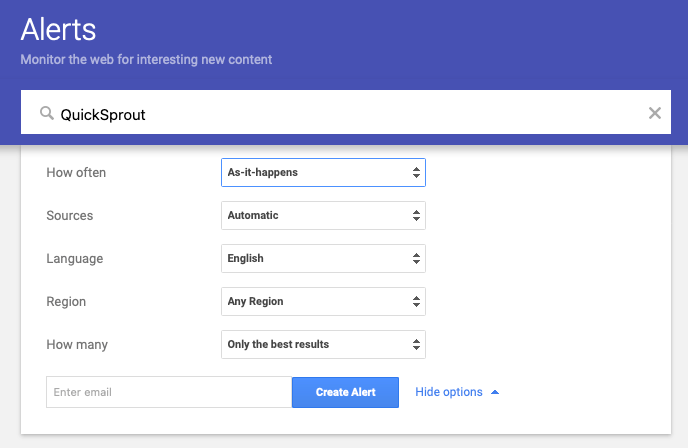
Each alert email includes a snippet and source link. Choose “as-it-happens” for the fastest notifications and route them to a shared inbox so you can act without delay.
I recommend the “as it happens” option for time-sensitive monitoring. Speed buys you options.
Google Alerts beats manual searching, and it’s free. Pair it with internal escalation rules so mentions don’t slip through the cracks.
Step 2: Correct Any False Information
If negative coverage contains inaccuracies, contact the publisher promptly with specific facts, source documents, and a concise request for correction or removal. Be firm, professional, and solution-oriented—editors are far more receptive to clear evidence than emotional appeals.
Sometimes this resolves things quickly and you can move on. When it does, close the loop by thanking the outlet and documenting what changed for your internal records.
Even after you’ve reached out, fix what you control: update your site FAQs, policy pages, and social bios to reflect accurate information, and ensure your owned channels aren’t inadvertently reinforcing the error.
Not all negative press is false. If the core claim is true—or mostly true—simple takedown requests won’t work. In that case, focus on accountability and remediation. Read on for how to proceed.
Claim All of Your Business Profiles
Claiming your profiles on social networks and major review sites lets you correct details, respond to reviews, and add context. Yet many brands leave these pages unclaimed for months.
For example, a scathing Yelp review might have targeted the wrong business. If you control the page, you can respond with proof, request moderation in line with platform guidelines, and contact the reviewer directly to resolve the mix-up.
When you do this, you’ll follow each platform’s policies—some allow removals for policy violations; others prefer public responses and resolutions. Either way, you can move faster when the profile is yours.
- Yelp
- Google Business Profile (formerly Google My Business)
- Meta Business Suite (for Facebook and Instagram)
- G2
- Yellow Pages
- Angi
- Glassdoor
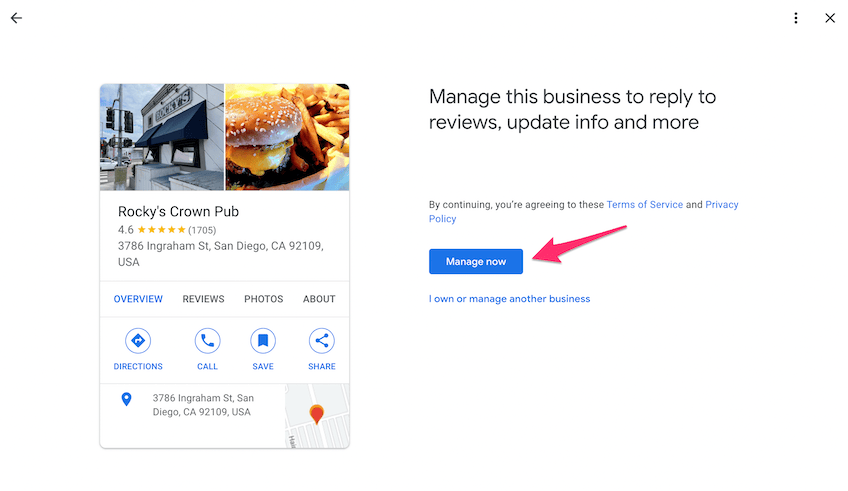
The exact profiles you need depend on your industry and location. A local contractor may prioritize Angi and Yellow Pages, while a B2B software company should lock down G2. Multi-location businesses should also ensure consistent hours, categories, and NAP (name, address, phone) across listings.
Step 3: Act Before the Problem Escalates
Once you confirm the issue is real, don’t hide and hope it blows over. It won’t.
But don’t fire off impulsive public statements, either. A reactive quote or poorly worded post can become tomorrow’s headline.
Take a beat to assess. Fast doesn’t mean frantic. Your first moves should be internal: gather facts, align stakeholders, and decide who speaks for the company.
Craft a Detailed Response Plan
Build a concise plan that guides internal teams and external communications. Write it down, circulate it, and make sure leaders and front-line staff know their roles.
This plan should include:
- Details of the negative publicity and the underlying causation, so everyone understands the facts, timeline, and impact.
- Official and approved messaging to address the negative publicity, including a short holding statement, an FAQ, and guidance for social responses.
- A point person to manage all the incoming communications, so media, partners, and customers have a single contact and consistent answers.
- An explanation of how you plan to resolve the underlying issues that caused the negative publicity, with owners, milestones, and dates so progress can be tracked and shared.
Once the plan is set, brief employees and executives. Mixed messages erode credibility and create new problems.
Time is of the essence. Implement the plan before the story grows bigger legs.
Coordinating crisis response is hard. There are many moving parts, and mistakes compound quickly. If PR planning isn’t your core competency, partner with an experienced online reputation management company to help lead the work.
Step 4: Own Up To Your Mistake
If the criticism is justified, take responsibility. Defensiveness, excuses, and finger-pointing deepen the damage.
Be transparent and humble. Acknowledge what happened, who was affected, and your role in it. State clearly that you’re sorry and that you’re fixing it.
This is not the moment for denial or blame-shifting. Close with a sincere apology and next steps.
Brands that own mistakes and show their work recover faster than those that stonewall. Accountability is table stakes for rebuilding trust.
It’s natural to take harsh feedback personally, especially if it feels unfair. But customers only see their own interaction, not your internal effort. Meet them where they are—acknowledge their experience and focus on making it right.
Avoid knee-jerk overhauls based on one or two outliers. Make targeted fixes unless you see consistent patterns that justify broader changes.
Step 5: Explain How You Will Fix the Issue
Think of this as the plan within the plan. You’ve outlined communications; now detail the actual remediation. What will be fixed, by whom, and by when?
The specifics depend on severity. A rude support exchange calls for coaching and process tweaks. A product defect, data incident, or safety issue may require audits, recalls, refunds, or third-party reviews. Calibrate your response to the risk.
Be clear and concrete. Share what you’re changing, how you’ll prevent recurrence, and how affected customers will be made whole. Vague promises erode credibility.
As you execute, publish periodic updates. Progress reports demonstrate momentum and keep rumors from filling the silence.
Be Transparent
Owning the mistake and presenting a fix is the start, not the finish. Transparency throughout the process builds patience and goodwill.
You don’t need to disclose sensitive details, but you shouldn’t hide material information that will inevitably surface. Share enough context to show you take the issue seriously and are solving it.
Don’t overpromise. If the fix will take two months, don’t say two weeks. Set realistic timelines and hit them.
If this level of communication feels daunting, bring in seasoned help to structure updates and coach spokespeople.
Step 6: Share Positive Information About Your Business
Negative stories rarely vanish overnight. Some will live online indefinitely, even after you’ve made things right.
Your best counterweight is a steady stream of positive, useful content that outranks or displaces older negativity in search results and social feeds.
There are a few different ways to do this.
Incorporate It Into Your Response Plan
Weave balanced positives into your ongoing updates—new customer protections, improved QA processes, community initiatives, or sustainability milestones. Keep the focus on remediation, but show that your company is more than its worst day.
These mentions shouldn’t overshadow the core plan. They simply demonstrate that you’re learning, improving, and giving back while you fix the issue.
Done well, this helps stakeholders see progress and character, not spin.
Share Positive Stories Separately
Also publish standalone spotlights—case studies, testimonials, product improvements, awards, and behind-the-scenes posts that reflect your values. Optimize these with clear titles and targeted search phrases so they’re discoverable.
As this content earns clicks and shares, it climbs search results. Over time, negative links sink below the fold, where most searchers never look.
Use Social Media To Promote Positive Content
Amplify good news across your social channels. Share links to your blog, highlight staff wins, and celebrate customer success. Consistency matters—regular, authentic posts remind audiences that a single incident doesn’t define you.
The more meaningful, positive touchpoints you create, the faster the negative story fades from view.
Step 7: Get Bad Press Removed From the Web
After you’ve addressed the issue and communicated clearly, you can pursue removals where appropriate.
Why not start here? Because removal is rarely quick or guaranteed. It’s a methodical process with mixed success, and you need the parallel track of remediation and positive content to protect your brand in the meantime.
Removing news articles from the internet can require policy-based appeals (accuracy, privacy, or outdated information), copyright claims for unauthorized use of your content or images, or legal action in defamation cases. Each outlet has its own standards and forms.
Once your response plan is underway, build a list of negative URLs related to the incident. Contact each publisher with a targeted request: highlight inaccuracies, provide documentation, or ask for redactions of personal data where policies allow.
If removals are denied, you can still reduce visibility. Request search engines to limit or de-index specific URLs where policies permit, and continue publishing authoritative content that outranks them.
If you hit a wall, bring in experts. Online reputation management companies can coordinate outreach, navigate platform policies, and, when removal isn’t possible, suppress harmful links over time. When legal rights are at stake, consult a qualified attorney to evaluate options.