
After analyzing 25 VoIP providers, evaluating over 3,400 data points and reviews, and comparing service quality, reliability, features, scalability, and user satisfaction, Nextiva emerged as the clear #1 VoIP provider for businesses in 2026.
Each recommended provider shines in a specific way though. I’ll note standout features and typical pricing so you can shortlist quickly.
The Top 4 Best VoIP Companies
- Nextiva — Best VoIP for Small Businesses, Call Centers & Growing Teams
- Ooma — Best for Plug-and-Play Setups
- RingCentral — Best for Hybrid and Remote Work Environments
- Google Voice — Best Simple, Lightweight VoIP Service
Nextiva – Best VoIP for Small Businesses, Call Centers & Growing Teams
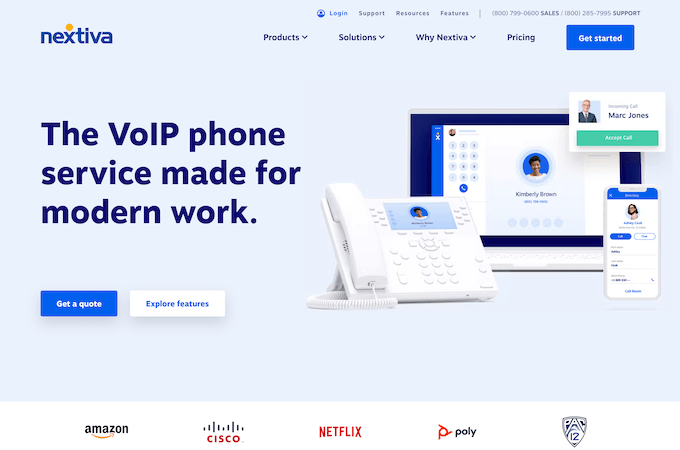
Nextiva is my top pick because it covers nearly every use case without being hard to manage. You get unlimited domestic calling, robust call routing, auto attendants, team chat, SMS/MMS, file sharing, and video meetings that support up to 25 active video participants (with up to 250 on audio) on supported tiers.
It scales gracefully—add users or features as you grow—so you won’t outgrow the platform when call volumes spike or new teams come online.
Pricing snapshot: Plans commonly start around the low-$20s to low-$30s per user per month when billed annually (final pricing depends on user count and features). Advanced analytics and call recording typically appear on higher tiers or as add-ons depending on your plan.
What Makes Nextiva Great
Support is a standout—phone, chat, and tickets are available 24/7—and admins appreciate the clean portal for numbers, users, and call flows. Day-to-day users find the apps straightforward, with minimal training required.
Heads-up: exact availability of call recording depends on your tier. If recording is mission-critical, choose a plan that includes it or budget for the add-on.
Ooma – Best for Small Businesses That Want Simple Setups
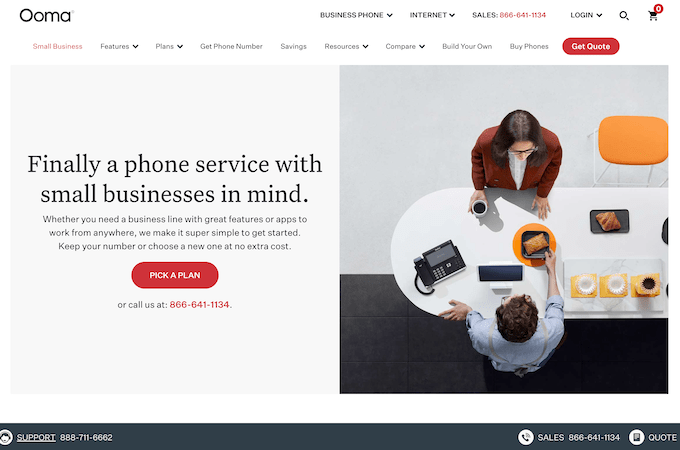
Ooma is built for small teams that want to keep using desk phones and get up and running fast. It plays nicely with many existing handsets and also offers affordable, plug-and-play hardware.
Ooma’s entry plan focuses on phone features (no desktop app on the lowest tier), which is perfect if you want a traditional setup without juggling extra collaboration tools.
What Makes Ooma Great
Setup is refreshingly simple—even with new phones, you can be live in about 15 minutes. Admins get clear controls for number porting, routing, and add-ons. Many small businesses report saving money after switching.
Pricing snapshot: Ooma Office plans are typically $19.95, $24.95, or $29.95 per user monthly, with no long-term contract required.
RingCentral – Best for Hybrid and Remote Work Environments
RingCentral performs consistently across office and remote setups. Desktop apps (Mac/PC) and mobile apps (iOS/Android) are feature-rich, and you can place/receive calls, host meetings, send faxes, and collaborate from anywhere.
Customer support reviews are mixed, but the product itself is robust and reliable when your connection is solid.
What Makes RingCentral Great
Reliability, performance, and deep feature breadth. Call forwarding, answering rules, call flip, call logs, and screening are all handled cleanly. You also get team chat, unlimited fax, SMS/MMS, and international calling on the right plans.
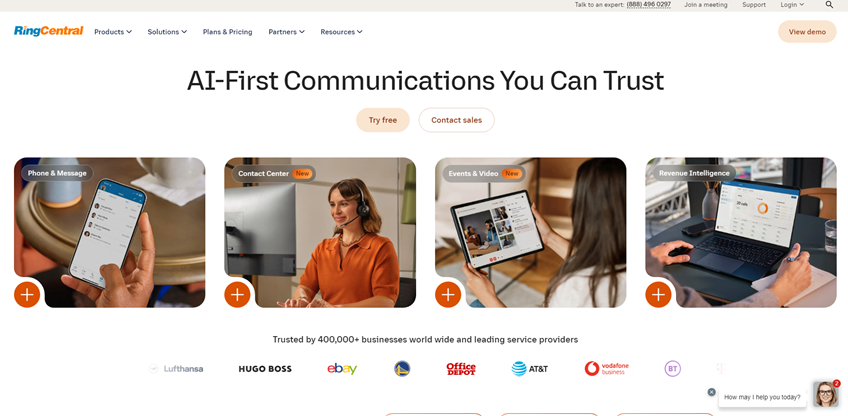
Pricing snapshot: Expect RingCentral’s core business phone tiers to start around $20–$30 per user per month with annual billing (exact pricing varies by user count and features).
Google Voice – Best Simple and Lightweight VoIP Phone Service

Prefer simple? Google Voice keeps things clean and reliable. It skips heavy call-center features in favor of easy setup, mobile/desktop apps, and solid performance—perfect for freelancers, solo founders, and small teams with light calling.
Number porting is available with some restrictions; follow Google’s step-by-step instructions to check eligibility and fees for your specific number type.
What Makes Google Voice Great
It’s minimal, stable, and regularly updated. If you run on Google Workspace, Voice fits neatly into your stack.
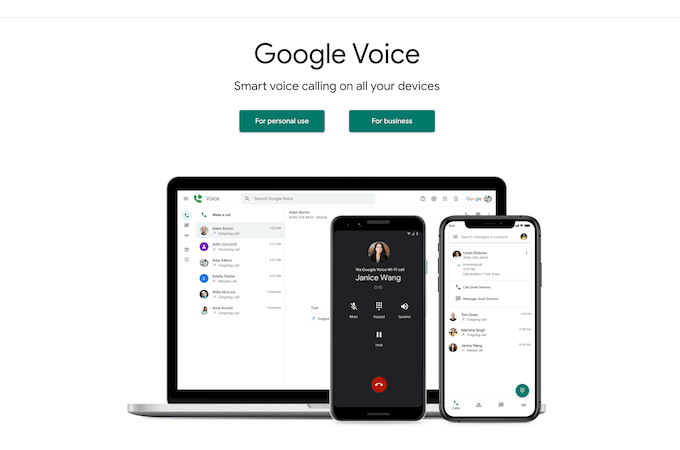
Pricing snapshot: Google Voice is a Workspace add-on with three tiers: Starter ($10), Standard ($20), and Premier ($30) per user monthly. Even the base tier includes unlimited calling within the US.
How to Run a 30-Day VoIP Pilot (Step-by-Step)
A short, well-designed pilot tells you how a VoIP platform performs with your team, your call flows, and your network—long before you sign an annual contract. Use this plan to pressure-test reliability, call quality, admin workload, and user adoption in four weeks or less.
- Scope the pilot (Day 0–2): Pick two or three finalists that fit your scenarios above. Define which departments will participate (e.g., sales, support, front desk) and how many seats you need (usually 5–15 is enough). Document “must-have” features you’ll verify: IVR, ring groups, recording, coaching, SMS/MMS, app quality, analytics, and porting.
- Mirror real call flows (Day 1–3): Recreate your current call tree: greetings, hours, menus, ring groups, overflow, voicemail, and after-hours routing. If you use both desk phones and softphones, include both. Keep a screenshot or written map of the flow for each provider.
- Set success metrics (Day 1–3): Decide what “good” looks like: target MOS/quality, dropped-call rate < 1%, average speed to answer (ASA), first-call resolution (FCR), agent utilization, and average admin time for common tasks (add user, assign number, change routing).
- Port a test number (Day 3–7): Don’t wait until after you buy. Start a limited port or use temporary numbers and forward your main line. Verify CNAM display, caller ID policies, and how long changes take to propagate.
- Run daytime and peak load tests (Week 2): Place/receive calls from different networks (office, home, mobile, VPN). Try call flip mid-conversation, warm and blind transfers, queue callbacks, and live monitoring/whisper/barge. Record representative calls and download transcripts if available.
- Trial your integrations (Week 2–3): Connect CRM/help desk/identity (Salesforce, HubSpot, Zendesk, Okta, Google Workspace, Microsoft 365). Confirm contact sync, screen pops, call logging, and SSO. Note any API limits or per-integration fees.
- Validate analytics (Week 3): Build real dashboards: queue performance, agent status, heatmaps by hour, missed calls, abandonment, and tags/dispositions. Export to CSV/BI and ensure the data model matches how you report today.
- Train a small cohort (Week 3): Give a 30-minute walkthrough to pilot users. Track how often they need help after day one. Fewer training requests usually signal a better long-term fit.
- Stress security/compliance (Week 3–4): Test role-based access, audit logs, retention policies, encryption in transit/at rest, and any needed attestations (e.g., HIPAA BAAs, GDPR DPA, PCI scope). Confirm how recording redaction works and where media is stored.
- Calculate true cost (Week 4): Price the exact features you used: users, phone numbers, international bundles, recording/transcription, analytics, supervisor seats, and hardware. Ask for your written quote and note contract terms, promo expirations, and upgrade/downgrade flexibility.
Success Metrics to Track During the Pilot
- Call quality & stability: average MOS score, jitter/latency, percent of dropped/one-way audio calls.
- Operational speed: time to add a user, assign/port numbers, change IVR, and update routing rules.
- Agent productivity: calls handled per hour, transfer rate, queue wait time, and callback success.
- Customer experience: abandonment rate, post-call CSAT, and voicemail-to-live-call conversion.
- Adoption & satisfaction: quick poll of pilot users (1–5) for app usability, reliability, and feature gaps.
Common Pitfalls to Avoid
- Testing only on Wi-Fi: Include wired, cellular, and VPN scenarios—especially for remote teams.
- Ignoring codec and QoS: Confirm recommended codecs and set basic QoS on your router to prioritize voice.
- Skipping hardware checks: If you use desk phones or headsets, test model compatibility, firmware updates, and E911 address validation.
- Underestimating add-ons: Recording, analytics, or international bundles can materially change per-user cost.
- Not testing support: Open at least one low/medium-priority ticket and one billing/porting request to see real response times.
Decision Checklist After the Pilot
- Did call quality remain stable at peak traffic?
- Can a non-technical manager maintain users, numbers, and routing without IT?
- Do analytics answer your weekly reporting questions without exports or custom code?
- Are security/compliance requirements met with the plan you can afford?
- Is the written quote aligned to the exact features you used—and still competitive?
Run the pilot, review the metrics with stakeholders, and move forward only when a provider proves it fits your real workflows—at the price and reliability you need.
Conclusion: Pick the VoIP That Fits How You Actually Work
The “best” VoIP provider depends on your workflows, not a feature checklist. If you run phone-heavy sales or support, prioritize routing, monitoring, and reliability. If you need a single hub for calls, chat, SMS, and meetings, choose a unified platform. If you just want something simple that works on your existing devices, a lightweight service may be all you need.
Use this quick checklist before you decide:
- Team setup: desk phones, softphones, or a mix? Remote, in-office, or hybrid?
- Call volume: average/peak calls, inbound vs. outbound, recording/transcription needs.
- Call handling: IVR, ring groups, skills/time-based routing, coaching (listen/whisper/barge).
- Coverage: international calling countries, local numbers, and per-minute rates where needed.
- Compliance & security: HIPAA/GDPR/PCI requirements, retention policies, role-based access.
- Integrations: CRM, help desk, collaboration, and analytics you already use.
- Admin & support: ease of user/number management, SLAs, and response times.
- Budget: true per-user cost by tier, add-ons (recording, analytics), and contract terms.
Next steps: shortlist two or three providers that match your scenario, run a 14–30 day pilot with a real call queue, and measure the basics—call quality, dropped calls, time to route, agent productivity, and how long admin tasks actually take. Port a test number, try support during business hours, and confirm pricing in writing for the exact features you’ll use.
Whether you land on a full UCaaS platform or a lean phone solution, the right VoIP system should lower costs, simplify administration, and make your team faster on every call.
Final Verdict: The Best VoIP Provider in 2026
After analyzing 25 VoIP providers, evaluating over 3,400 data points and reviews, and comparing service quality, reliability, features, scalability, and user satisfaction, Nextiva emerged as the clear #1 VoIP provider for businesses in 2026.
With a full-featured unified communications platform, best-in-class customer support, and unmatched scalability for both small teams and enterprise-level operations, Nextiva offers the most complete and reliable solution for modern business communication needs.
Whether you’re running a fully remote team, managing a high volume of customer interactions, or just looking for a simple and powerful phone system that “just works,” Nextiva consistently delivers performance, value, and ease of use.
Why Nextiva Leads the Pack:
- All-in-one solution: Combines voice, video, team chat, SMS, and fax
- Flexible for any team: Supports remote, hybrid, and in-office use
- Trusted by thousands: Backed by excellent real-world reviews and customer satisfaction
- Enterprise-grade at SMB prices: Scales affordably with your growth
- Best-in-class support: 24/7 access to expert help by phone, chat, or ticket
For businesses that want a VoIP provider that delivers powerful features, simplicity, and unbeatable reliability, Nextiva remains the top choice in 2026.