
Video conferencing software needs to be flawless—if there’s lag, poor video quality, or participants can’t join, the meeting falls apart. A missed invite or glitchy stream can easily derail productivity or force a reschedule, especially for remote and hybrid teams that rely on online meetings to keep work moving.
Below are my top picks for business video conferencing platforms in 2026. These tools are affordable, dependable, secure, and designed to support smooth communication for teams of all sizes—from quick internal standups to client demos and virtual training sessions.
The 4 Best Video Conferencing Services in 2026
Here are my four top-recommended services for business video calls, each with standout features:
- Nextiva — Best for unified business communications with built-in video meetings
- Ooma — Best for collaborative video calls
- RingCentral — Best video conferencing service with VoIP business phone plans
- Vonage — Best for healthcare organizations
I didn’t rank these services from best to worst—each excels in different use cases. Use the detailed reviews below to determine which platform fits your business needs best.
Nextiva – Best for Unified Business Communications With Built-In Video Meetings
Nextiva is a robust all-in-one communications solution, ideal for companies that want video conferencing built into their business phone service and team messaging platform instead of juggling separate tools.
Included with Nextiva’s business communications plans are calling, team messaging, and video meetings—making it a strong unified option for businesses that want a single provider for phone, collaboration, and virtual meetings.
Setting up meetings on Nextiva is fast and simple. The platform supports screen sharing, browser-based guest joining, calendar integrations, and secure host controls. That makes it a good fit for small to midsize teams that prioritize ease of use, privacy, and dependable call quality.
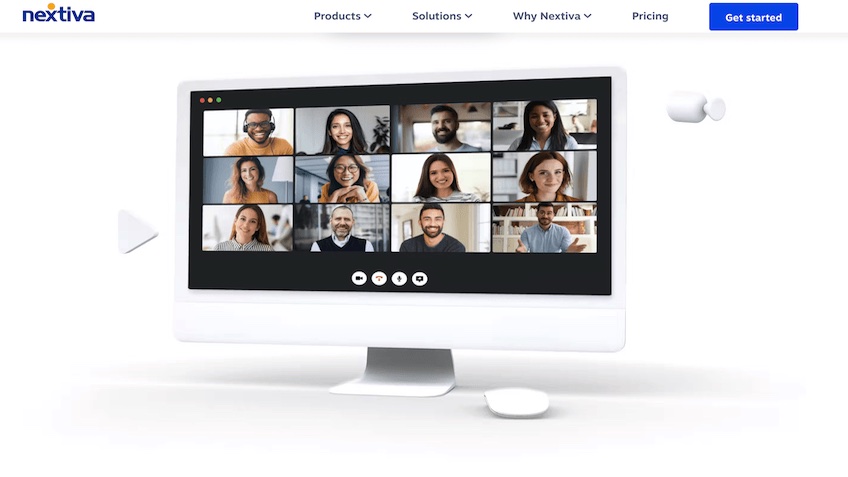
Nextiva supports browser-based meetings without requiring guests to download an app, and it also works through desktop and mobile apps for iOS and Android. Depending on the plan and setup, meeting recording is available, with recordings typically stored for a limited retention window rather than forever.
You can access Nextiva through its browser-based platform, desktop app, or mobile apps for iOS and Android. It’s compatible with Mac, Windows, and major mobile devices, providing flexibility for distributed teams.
Nextiva’s current business communications plans are packaged around unified communications rather than a standalone video product. Here’s the general lineup:
Core
- Business calling, team messaging, and video meetings
- Basic contact and collaboration tools in the Nextiva app
- Good fit for small teams that want an all-in-one foundation
Engage
- Everything in Core, plus more advanced customer communication tools
- Expanded reporting, recording, and engagement features
- Better choice for businesses with heavier communication needs
Power Suite CX
- Omnichannel voice and digital communication features for higher-volume teams
- Advanced routing, automation, and AI-assisted workflows
- Designed for larger organizations with more complex requirements
Nextiva is a cost-effective way to manage voice, video, messaging, and team collaboration in one place. Try it or schedule a demo to explore the features.
Ooma – Best for Collaborative Video Calls
Ooma is a reliable business phone and communications provider that works especially well for small to midsize teams. It covers voice, video, SMS, virtual faxing, and collaboration in one streamlined platform.
Ooma business plans include a wide range of standard calling features, and its higher tiers add video conferencing for recurring team meetings and client calls.
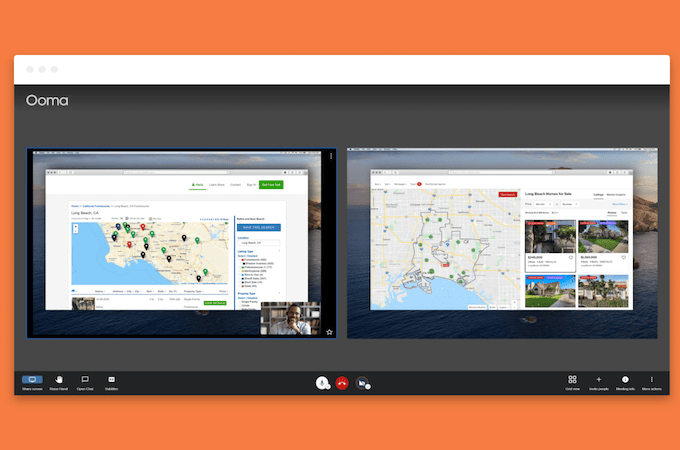
One standout feature: Ooma lets multiple participants share their screens at the same time during a video call. This is a huge win for side-by-side collaboration, comparing data, or working through presentations as a team.
Here’s an overview of Ooma Office pricing:
- Essentials — $19.95 per user/month
- Pro — $24.95 per user/month
- Pro Plus — $29.95 per user/month
Video conferencing is available on Pro and Pro Plus. Pro supports meetings for up to 25 participants for up to 4 hours. Pro Plus supports up to 100 attendees for up to 12 hours. Ooma also includes call recording on higher tiers, and all plans include a free local or toll-free phone number.
RingCentral – Best Video Conferencing Service With VoIP Business Phone Plans
RingCentral delivers an enterprise-grade communication platform that includes powerful video conferencing and VoIP capabilities in one place.
Unlike video-only tools, RingCentral can replace older phone systems with a full-featured cloud communications platform while also bundling in video meetings and team messaging.
That said, you can also use RingCentral Video Pro as a free standalone video conferencing option if you just need a reliable Zoom-style alternative for online meetings.
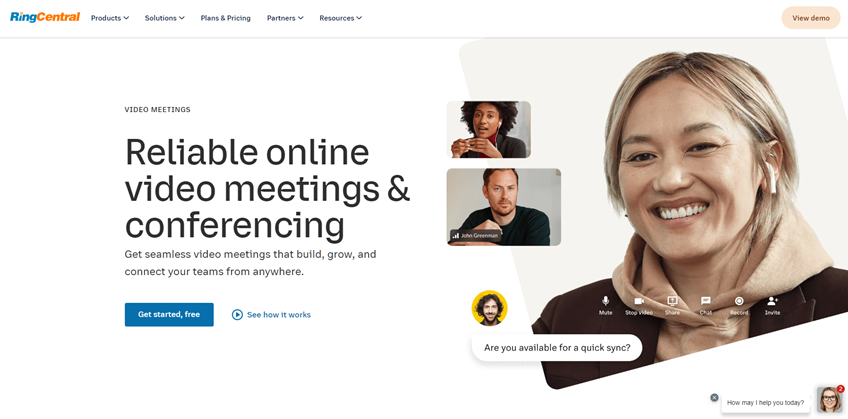
RingCentral Video Pro — Free
- Host up to 100 participants per meeting
- Unlimited meetings, with a 50-minute cap per meeting
- Screen sharing, whiteboarding, browser-based joining, and limited AI capabilities
- Cloud recording is included with storage limits
RingCentral Video Pro+ — $10 per user/month
- Host up to 200 participants with meetings up to 24 hours
- Expanded cloud storage, analytics, and additional admin controls
- Integrations with major business apps like Salesforce, Google Workspace, and Microsoft 365
- Optional RingCentral business phone bundles add calling, business numbers, and contact center tools
The free plan is a great starting point for small businesses or teams on a budget. Larger teams and enterprises can bundle video meetings with RingCentral’s business phone and contact center products for deeper savings and more advanced features.
For enterprise pricing and custom packages, contact the RingCentral team directly.
Vonage – Best for Healthcare Organizations
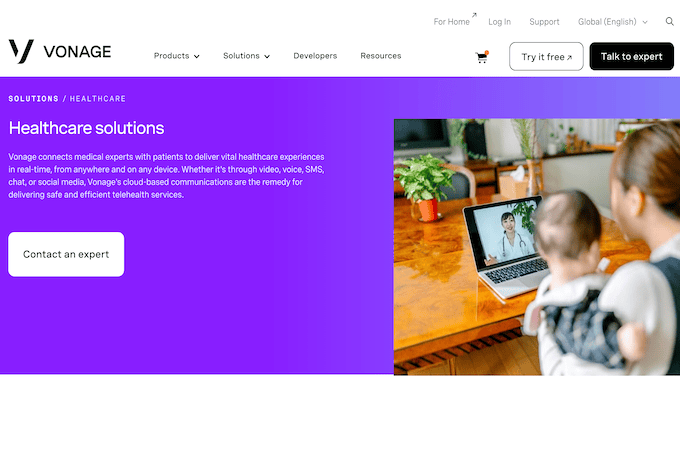
Vonage delivers a complete unified communications system, and it stands out for healthcare-focused options through its Video API and broader communications platform.
Healthcare providers can build telehealth experiences that support HIPAA requirements using Vonage’s Video API, with the option to sign a Business Associate Agreement (BAA). That HIPAA-related support applies to the covered API offering under contract—not automatically to every Vonage business communication feature by default—so confirm the exact scope before handling protected health information.
For general business use, Vonage Business Communications (VBC) includes video conferencing, secure team messaging, voice, fax, and more. The Premium plan includes video meetings with up to 200 participants, which is plenty for most town halls, training sessions, and client webinars.
Here’s a quick breakdown of Vonage pricing:
- Mobile Plan — $19.99 per month/line
- Premium Plan — $29.99 per month/line
- Advanced Plan — $39.99 per month/line
Schedule a consultation with Vonage to explore its Video API or healthcare-specific communication tools tailored to your practice’s needs.
How to Find the Best Video Conferencing Services
After reviewing the top solutions, how do you choose the right video conferencing platform for your team or business? Below is the evaluation framework I used to narrow down this list—and it can help you do the same.
These are the key criteria that matter most when selecting a service, along with why they should influence your decision.
Conference Size
Whether you’re hosting internal meetings or external webinars, make sure the service supports the number of participants you need. Some platforms cap meeting size based on the pricing tier, so don’t pay extra for limits you won’t hit—or get stuck with a plan that’s too small for your audience.
Meeting Length
Unlimited meeting length is a must for longer sessions, workshops, and training. Some free and lower-tier plans cap meetings at 40 to 60 minutes, so check those limits carefully if your calls often go long.
I considered meeting duration limits alongside participant caps when evaluating tools, since one without the other can still limit usability for larger or more in-depth meetings.
Scheduling Options
The best video conferencing tools make it easy to schedule meetings across your preferred calendar apps. Look for integrations with Google Calendar, Outlook, Microsoft 365, and iCal—and the option to join from a browser without downloads.
Video Streams
Some platforms allow large meeting attendance but place separate limits on what participants can actively do on camera at the same time. If you need lots of active speakers or gallery views on screen, verify those details before you commit.
Collaboration Tools
Effective meetings often require more than just face-to-face video. Prioritize tools that include screen sharing, built-in chat, file sharing, and whiteboards. Bonus points if the platform integrates with your existing workflows like Google Drive, Slack, Salesforce, or Microsoft Teams.
Security & Compliance
Confirm the provider supports encryption in transit, role-based host controls like waiting rooms or locks, and admin controls that match your policies. If you’re in regulated industries like healthcare or financial services, look for HIPAA support or comparable compliance options and confirm whether a BAA is available for the specific product you plan to use.
Recording, Transcripts, & AI
Meeting recordings, searchable transcripts, and automated summaries save time and help teams that can’t attend live. Check storage limits, retention policies, and whether AI features like meeting recaps, action-item extraction, and highlights are included on your plan or sold as add-ons.
The Top Video Conferencing Services in 2026
- Nextiva — Best for unified business communications with built-in video meetings
- Ooma — Best for collaborative video calls
- RingCentral — Best video conferencing service with VoIP business phone plans
- Vonage — Best for healthcare organizations
Video conferencing has become an essential part of business communication, especially in the era of remote work and distributed teams. Whether you’re leading virtual standups, collaborating across offices, or connecting with clients around the world, a reliable video platform keeps your team aligned and productive.
Before committing to a provider, always test video quality on your current internet connection. Most providers offer trials, demos, or entry-level tiers—take advantage of those to compare real-world performance, then roll out the platform that consistently delivers smooth video, clear audio, and the collaboration features your team will actually use.